
- All
- Product Name
- Product Keyword
- Product Model
- Product Summary
- Product Description
- Multi Field Search
 English English

Views: 0 Author: Site Editor Publish Time: 2025-08-27 Origin: Site


When it comes to engine performance, every component plays a role—but few are as critical as the piston ring. In high-performance engines, where power output, wear resistance, and reliability are non-negotiable, the chrome piston ring has become a staple. At Guangzhou ShuangCheng Auto Parts Co., Ltd. (CTPR), we understand the demands of today’s performance markets and specialize in offering piston rings that combine advanced coating technologies with durable base materials. Whether you're building for speed, endurance, or extreme conditions, chrome piston rings can make the difference in both engine longevity and efficiency.
A chrome piston ring is a specially engineered engine component designed to provide an optimal seal between the piston and the cylinder wall. Unlike standard cast-iron rings or molybdenum-coated variants, chrome rings are coated with a hard layer of chromium using advanced electroplating methods. This thin but extremely tough surface layer significantly increases hardness, offering superior resistance to wear, heat, and corrosion.
The key difference lies in the properties of chrome compared to other common coatings. Chrome-plated rings exhibit much higher surface hardness, typically above 850 HV, allowing them to withstand abrasive environments such as those found in turbocharged, off-road, or racing engines. While standard rings may suffice in general-use engines, chrome piston rings maintain performance under the extreme pressures and temperatures of high-output systems.
CTPR’s chrome piston rings are manufactured using premium-grade materials and precision surface treatments to ensure that they outperform conventional alternatives in both lab tests and real-world applications.
High-performance engines operate under conditions far more severe than standard engines. They generate more heat, experience greater internal pressures, and often use fuels or lubricants that increase frictional load. Under such conditions, ring durability and sealing integrity are critical.
Chrome piston rings offer key advantages:
Superior Heat Resistance: The chrome layer prevents thermal deformation and maintains sealing effectiveness even at elevated combustion temperatures.
Wear Resistance: The high surface hardness dramatically reduces wear, which is especially valuable in engines with longer stroke cycles or higher RPM limits.
Ideal for Abrasive Environments: Dirt track, rally, or desert racing engines often ingest dust or grit. Chrome rings resist surface scratching far better than softer coatings, reducing the chance of scoring the cylinder wall.
With our years of experience in performance engineering, CTPR delivers chrome piston rings that stand up to the rigors of the most demanding engines, ensuring extended service life and consistent compression.
The quality of a chrome piston ring begins with precision manufacturing. At CTPR, we use advanced CNC lathes and grinding systems to fabricate base rings with tight tolerances. Once shaped, the rings undergo either electroplating or physical vapor deposition (PVD) to apply the chrome layer.
Electroplating is the most widely used method, where rings are submerged in a chromium solution and an electric current is passed to deposit the metal. This results in a uniform coating, typically ranging between 0.05 to 0.15 mm in thickness.
PVD coatings, while less common due to cost, offer even tighter control over layer thickness and surface finish. The result is a hard, dense layer that bonds extremely well with the substrate, reducing the likelihood of flaking or delamination under stress.
Each ring is then tested for coating adhesion, dimensional accuracy, and surface roughness. At CTPR, our stringent quality control ensures every chrome piston ring that leaves our facility is ready for high-performance deployment.
Beyond the technical specifications, chrome piston rings offer tangible benefits to engine builders and end users alike.
Increased Fuel Efficiency: Tighter sealing means better combustion efficiency and reduced blow-by. Over time, this contributes to lower fuel consumption, especially in performance engines that demand high precision.
Prolonged Engine Life: The wear resistance of chrome coatings helps maintain cylinder integrity, delaying the need for costly overhauls or part replacements.
Enhanced Power Delivery: Better ring sealing equates to improved compression and smoother power curves, particularly noticeable in dirt track or off-road racing, where conditions fluctuate rapidly.
Several engine tuning experts and racing teams using CTPR chrome piston rings have reported consistent performance even after extended usage in competitive environments. Whether you're building a rally car or a performance motorcycle, the benefits of chrome plating are not theoretical—they’re proven on the track.
While chrome piston rings bring many advantages, they are not without considerations:
Longer Seating Time: The hardness that makes chrome rings so durable also makes them slower to conform to the cylinder wall during break-in. This means they require more precise honing of the bore and a longer break-in process to reach optimal sealing.
Bore Surface Compatibility: Chrome rings perform best with plateau-honed cylinders. An improper surface finish can lead to excessive wear during the seating phase or even glazing of the cylinder wall.
Understanding these nuances is essential for proper installation. CTPR provides detailed installation guides and technical support to ensure that your chrome piston rings are installed in conditions that allow them to perform at their best.
Chrome piston rings are ideally suited for:
Off-Road and Rally Engines: These engines often encounter abrasive particulates and variable loads.
Turbocharged or Supercharged Engines: Where increased cylinder pressure and temperature demand higher strength.
Heavy-Duty Industrial Engines: Such as those used in mining or marine applications.
However, for daily driving or low-output engines, the cost and longer break-in period of chrome rings might not offer a significant return on investment. In such cases, molybdenum-coated or standard cast-iron rings may be more appropriate.
At CTPR, we work closely with customers to determine the best piston ring solution based on specific engine types and use cases, ensuring a tailored fit for your performance needs.
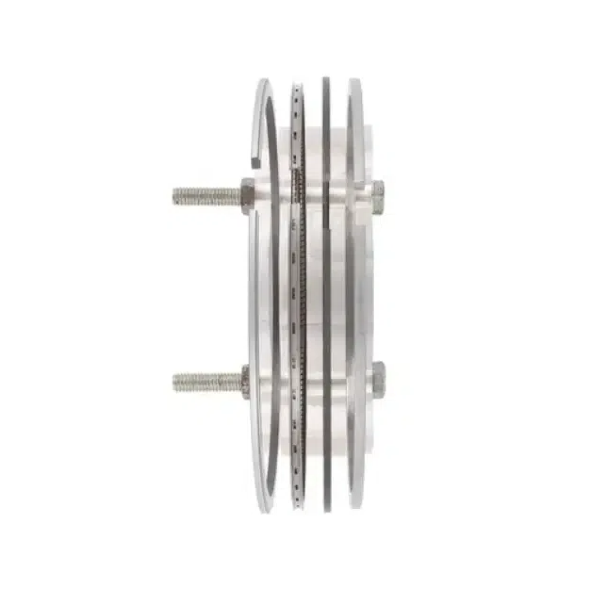
For high-performance applications where durability, heat resistance, and sealing efficiency are top priorities, a chrome piston ring can be a game-changer. At Guangzhou ShuangCheng Auto Parts Co., Ltd., we are committed to providing precision-engineered piston rings that meet the needs of today’s demanding engines. Backed by over a decade of industry experience and cutting-edge production methods, our chrome piston rings offer real value and proven performance.
If you're planning a build or looking to upgrade your existing engine components, contact us today to learn more about how our chrome piston rings can elevate your engine’s capabilities. We’re here to support your performance goals with quality products and expert service.

We are proud to share the success of our participation in the INA PAACE Automechanika Mexico 2025, one of the leading automotive exhibitions in Latin America. This year, we had the opportunity to showcase our latest engine components, including pistons, piston rings, and cylinder liners ...

April 2025 marked a significant milestone for Guangzhou ShuangCheng Auto Parts Co., Ltd as we took part in Automechanika Riyadh 2025, one of the premier automotive trade events in the Middle East. This year, we had the privilege of showcasing our premium engine components, including pistons, piston

We are thrilled to share that Guangzhou ShuangCheng Auto Parts Co,. Ltd participated in the prestigious Egypt AutoTech Exhibition 2026, showcasing the latest innovations in the automotive industry. This year’s exhibition was an incredible success, bringing together industry leaders...

Guangzhou ShuangCheng Auto Parts Con., Ltd recently participated in the Latin Tyre & Auto Parts Expo 2025 in Panama (July 9th-11th), showcasing our high-performance engine components, including pistons, piston rings, and cylinder liners.The event provided a great opportunity to connect with industry
